Three Sheep Grazing in Field Redwork
First Impressions of This Redwork Design for Craft Fair Products
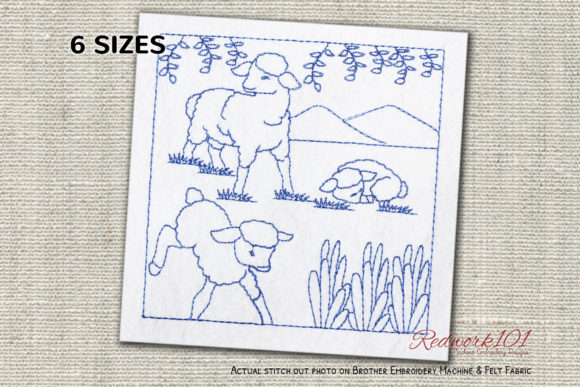
When I first opened the Three Sheep Grazing in Field Redwork embroidery file, I immediately recognized its potential for the farmhouse and rustic decor market. This machine embroidery design lands squarely in the sweet spot between cute and rustic, with a clean redwork aesthetic that feels both classic and contemporary. The three sheep are arranged in a simple grazing scene, and the red stitching gives it a traditional folk-art warmth that handmade market shoppers gravitate toward. What strikes me most is the readability of the design at a glance. A customer walking past a craft fair booth will instantly understand what they are seeing, and that clarity is a major advantage for any craft fair product.
The optional Box Stitch mentioned in the listing adds a framing element, but I appreciate that it is not mandatory. The description notes that the outer box color differs from the design itself, and you can skip it entirely. For my own production, I would test the design both with and without the box to see which version feels more cohesive on my finished products. The redwork style keeps the thread palette simple, which is a practical advantage for batch production. You are not juggling multiple thread colors or worrying about color registration. One clean red thread, one well-digitized design, and you are ready to stitch.
Tote Bags and Market Bags
This is where Three Sheep Grazing in Field Redwork truly shines. A sturdy cotton tote bag with the design centered on the front panel becomes an instant conversation piece at a craft fair. The redwork style pops beautifully against natural canvas, cream, or light gray fabric. I would position this as a mid-priced item in my booth, appealing to shoppers looking for a charming, functional piece. The design is large enough to fill the space without overwhelming the bag, and the simple composition photographs well for online listings. For Etsy sellers, this is a strong candidate for a best-selling tote bag design.
Aprons and Kitchen Towels
Aprons are another natural fit. The grazing scene sits nicely on the lower front of an apron, adding a decorative touch without interfering with the garment's function. For tea towels, I would recommend placing the design on one end of the towel, leaving the rest of the fabric for folding or hanging display. The redwork style is especially effective on kitchen linens because it feels both vintage and fresh. Customers at handmade markets often buy multiple towels as gifts, and a cohesive design like this one encourages repeat purchases. I would produce a small batch of apron embroidery and tea towel embroidery pieces to test which sells faster at the booth.
Embroidered Patches and Pouches
For embroidered patches, the design needs to hold its detail at a smaller scale. The sheep are simple shapes, which is a good sign. I recommend testing the patch version at 3 to 4 inches wide to confirm that the facial features and wool texture remain clear. If the stitch density is too high, the patch may feel stiff; if too low, the sheep may look blurry. A well-made patch can be sold as a standalone item or applied to caps, jackets, and bags. Small fabric pouches and zip pouches also benefit from this design. A pouch with the sheep design near the center or bottom edge feels giftable and easy to produce in multiples.
Pillow Covers and Home Decor
Pillow covers are a higher-ticket item that can elevate your booth's perceived value. Three Sheep Grazing in Field Redwork on a cream or natural linen pillow cover brings a farmhouse elegance that appeals to home decor shoppers. I would display one finished pillow on a small chair or bench in the booth to draw the eye. The redwork style keeps the look refined, and the design does not compete with busy fabric patterns. It works as a standalone focal piece. For customers who love rustic decor, this is an easy sell.
Practical Selling and Production Points for Craft Fair Sellers
From a production standpoint, Three Sheep Grazing in Field Redwork is a repeatable design. Once you have your hoop size, stabilizer, and thread color dialed in, you can stitch multiple units in a single session. This is critical for batch production before a weekend show. I always recommend creating at least one real mockup on the actual fabric you plan to use, then photographing it for your Etsy listings and printable mockups. A photo of the finished product on a tote bag or towel is far more convincing than a digital rendering.
The design is easy to understand at a glance, which matters in a busy craft fair environment. Customers walking by will stop because they recognize the scene and appreciate the handmade quality. The redwork color palette is also very forgiving for display. You can group multiple products together without worrying about clashing colors. This makes booth arrangement simpler and more visually cohesive.
For commercial embroidery use, always confirm your commercial licensing before selling finished products. The design description does not specify license terms, so check with the seller to ensure you are covered. This is a standard step that protects your business and your customers.
Careful-Use Notes Before You Stitch
Every embroidery designer learns the hard way that not every design works on every fabric. Here are my specific notes for Three Sheep Grazing in Field Redwork based on the description and the redwork style.
- Dense stitch areas: Redwork designs typically use a combination of satin and running stitches. If the sheep's wool is filled with dense satin stitches, test on your chosen fabric first. Dense stitching can cause puckering on lightweight fabrics or pull on knits. Use a cutaway stabilizer for stretchy fabrics and a tearaway stabilizer for stable wovens.
- Tiny details: The sheep's eyes, ears, and legs may be small. If the design includes very fine lines, they could lose clarity on textured fabrics like linen or thick cotton. I recommend stitching a test sample on a scrap piece of your intended fabric before committing to a full batch.
- Small lettering: The product description does not mention any lettering, but if the design includes text, verify that the font is legible at the size you plan to use. Small text on towels or caps often becomes unreadable.
- Thick fabric and textured towels: For tea towels with a loose weave, the design may need a water-soluble topper to keep the stitches from sinking into the fabric. This is a common issue with machine embroidery design on towels, and the fix is simple: add a layer of stabilizer on top of the fabric, stitch through it, then rinse away.
- Curved cap surfaces: If you plan to embroider this design on a cap, use a cap hoop and a stiff stabilizer. The redwork style's continuous lines may shift on a curved surface if the fabric is not properly tensioned. Test on a practice cap first.
- Dark fabric: Redwork is traditionally stitched with red thread on light fabric. If you try to stitch on dark fabric, the red may not contrast well. Stick to cream, white, natural, light gray, or pale blue backgrounds for the best visual impact. If you want to use a darker fabric, consider switching to a lighter thread color, but that would change the design's character.
- Smaller sizes: If you reduce the design to fit a patch or small pouch, check that the sheep remain recognizable. The composition may lose its charm if the sheep become too tiny. I recommend keeping the design at least 3 inches wide for clarity.
Visual Appeal, Customer Attention, and Booth Display
A craft fair booth needs visual anchors that draw customers in from across the aisle. Three Sheep Grazing in Field Redwork serves as a strong anchor because of its simplicity and charm. The red thread stands out against light fabrics, creating a clean, recognizable silhouette. Customers will notice the design from several feet away, and the redwork style signals a handmade, thoughtful product.
In my experience, Farm Animals themed designs perform well at markets that attract families, rural shoppers, and customers looking for gifts with a personal touch. The three sheep are approachable and non-intimidating. They evoke a sense of calm and countryside living, which resonates with the farmhouse decor trend that has remained popular for years. The design does not rely on trends however. It feels timeless, which means you can produce it for multiple seasons without worrying about it going out of style.
For product value, the design adds a handmade element that justifies a higher price point. A plain tote bag might sell for ten dollars, but an embroidered tote bag with a design like this can sell for twenty or more, depending on your market. The key is to communicate the handmade quality through your display, packaging, and product photography. When customers see the stitching up close, they appreciate the work that goes into each piece.
Brand consistency is another factor. If you build a booth around rustic, farmhouse, or animal-themed designs, Three Sheep Grazing in Field Redwork fits seamlessly. You can pair it with other redwork designs or complementary patterns. The optional box stitch gives you flexibility to create a cohesive look across multiple products. I would use the box on some items and skip it on others to offer variety without losing the design's identity.
Practical Embroidery Designer Notes for Production
Before you start stitching for your next craft fair, here is a checklist based on my own process for reviewing a new digital embroidery file.
- Test the design on scrap fabric. Always stitch a sample on the exact fabric you plan to use for your finished products. This is non-negotiable. You need to see how the stitches behave, how the fabric handles the density, and how the design looks in person.
- Check thread contrast. Red thread on white or cream fabric is classic, but test a few shades of red. A bright cherry red may feel different from a deep barn red. Choose the shade that matches the mood of your booth and your brand.
- Review spacing and placement. Decide where the design will sit on each product. For tote bags, center it or place it slightly above the center. For towels, position it near one end. For aprons, place it on the lower front bib or the pocket area. Use a placement template or a printed grid to confirm positioning before hooping.
- Confirm hoop size. The design file will specify a recommended hoop size. Make sure your hoop can accommodate the design without excessive re-hooping. If the design is larger than your hoop, you may need to resize it, which could affect stitch quality. Verify the dimensions before you start.
- Inspect stitch density. If the design has areas that feel too dense or too sparse, adjust the density in your embroidery software if possible. Some designs are optimized for a specific fabric type, and you may need to tweak the settings for your fabric.
- Use the right stabilizer. For most redwork designs on cotton or linen, a medium-weight tearaway stabilizer works well. For stretchy fabrics, use a cutaway stabilizer. For towels, add a water-soluble topper. Do not skip this step. Stabilizer choice directly affects the final quality of your embroidery file output.
- Create at least one real mockup. Stitch the design on a finished product and photograph it. Use this photo for your Etsy listing, your booth display, and your printable mockup materials. A real photo sells better than a digital rendering every time.
- Compare fabric colors. The design works best on light backgrounds. If you plan to offer multiple color options, stick to natural tones. Avoid dark or very bright colors that compete with the red thread.
- Confirm commercial licensing. As mentioned earlier, check the license terms for Three Sheep Grazing in Field Redwork before selling finished products. Some designers allow unlimited commercial use, while others require a separate license. This is a standard part of working with design assets for a small shop product line.
- Plan for batch production. Once you have tested the design and confirmed your settings, produce multiple units in a single session. This saves time and ensures consistency across your inventory. Stock up on hoop sizes, stabilizer, and thread colors so you do not run out mid-production.
Final Thoughts on Three Sheep Grazing in Field Redwork for Craft Fair Success
Three Sheep Grazing in Field Redwork is a solid choice for any craft fair product lineup. It offers a classic, approachable design that appeals to a wide range of customers, from farmhouse decor lovers to gift shoppers looking for something handmade. The redwork style keeps production simple and repeatable, and the optional box stitch gives you flexibility in presentation. Whether you are an Etsy seller building an online shop, a small shop product maker preparing for a weekend show, or a creative entrepreneur building a brand around rustic designs, this machine embroidery design deserves a spot in your production queue. Test it, tweak it, and then stitch it with confidence. Your customers will notice the difference.